
Bowie Previous Residents by Era
The right source changes with the date. Maryland land books anchor the ownership trail. Around them sit Bowie historical directories, telephone books, census schedules, yearbooks, newspapers, and probate files, each one adding household clues. Current Bowie assessment data gives a parcel starting point. It does not prove who occupied the home. The era table separates a source that records a legal transfer from one that printed a subscriber or enumerated a household. Bowie previous residents research works best when each note keeps the source type visible.
| Source | Years it covers | Where held | What it can show |
|---|---|---|---|
| Bowie-area Prince George's land books | 1696-1851 CE65/CM782; later series through current records | MDLandRec, Maryland State Archives, courthouse | Legal transfers and instruments; image availability varies. |
| Bowie county directories | 1878; 1894 references; 1930-31; 1954-55 | Historical Society, PGCGS, PGCMLS | Name, locality, address, occupation, or subscriber clues where printed. |
| Bowie-area LOC telephone directories | 1933-45, 1969-70, and 1971 | Library of Congress digitized scans | Subscriber name, street, locality, and phone, with omissions. |
| Bowie federal-census context | 1790-1950 released under the 72-year rule | NARA, Census, FamilySearch | Household composition and enumeration geography. |
| Bowie local newspapers and yearbooks | Selected Bowie and county runs | MSA, DeMarr, PGCMLS | Moves, deaths, organizations, classmates, and local context. |
Recent transfers start with Bowie assessment and deed data. The question then becomes who was tied to the address in an earlier publication year. That means a Bowie directory, census, newspaper, or archive. Permit pages may add dated project evidence. The county offers no fixed public Bowie historic permit index, so treat those finds as occasional rather than routine.
Bowie Address Records Before the Backtrail
Freeze the parcel facts first. The Maryland Real Property Search begins there. It offers Street Address, Property Account Identifier, Map/Parcel, and Property Sales search methods. Standard SDAT search ignores owner names. Town, neighborhood, subdivision, and ZIP searches fail too. Copy everything the record shows: the Bowie situs address, property account number, map and parcel, lot, subdivision, plat, transfer date, owner line, mailing address, and any Liber/Folio or other deed reference.
Situs simply means the physical Bowie parcel. A mailing address is where notices go, and it can differ for many reasons. Neither field alone proves present residence. For older Bowie material, the legal description outweighs the current street label. It may rely on a lot, tract, plat, farm name, or metes-and-bounds wording. Keeping those forms linked together stops an old record from attaching to the wrong modern number.
- Property Account Number, or PAN
- The SDAT account identifier used with county, map, parcel, and Bowie assessment information.
- Legal description
- The land wording that identifies a tract, lot, plat, subdivision, or metes-and-bounds parcel. It is often the durable bridge across Bowie address changes.
- Liber/Folio
- A Maryland book and page reference that can point to a recorded Bowie land document.
Note: Preserve the Bowie PAN and legal description before opening a deed index, because current city and mailing labels can diverge from old land-record vocabulary.
Bowie Previous Residents in the Deed Chain
The deed chain settles Bowie ownership first. Names and dates come with it. Then check them against household sources. Open the Maryland Land Records portal and select Prince George's County. The current v5 route requires an account and may use multi-factor sign-in. The public account is described as free. Search a Bowie current owner as grantee, test exact and variant spellings, limit by an approximate date or other visible index field, and read the deed image before relying on the legal description.
- Use SDAT to copy the current Bowie parcel's PAN, lot or tract description, transfer date, owner line, and any book or page reference.
- In MDLandRec, search the current grantee or owner with Prince George's County and an approximate date. Test initials, suffixes, alternate spellings, and legal capacity when needed.
- Open the result and record grantor, grantee, party role, document type, recording date, consideration, book and page, legal description, and any prior reference.
- Jump to the prior book and page when the deed says “being the same as.” If it does not, search the seller as an earlier grantee near the recorded date.
- Repeat the seller-to-buyer loop only after reconciling lot, tract, plat, and parcel language to the same property.
- Grantor
- The party conveying an interest in a deed, commonly the seller in a transfer.
- Grantee
- The party receiving an interest, commonly the buyer. A later grantor search can lead to that person's earlier purchase.
- Chain of title
- The linked sequence of recorded interests in the same parcel. It is not a list of everyone who lived there.
Bowie Deed References That Go Back
“Being the same as” language is the fastest documented bridge in a Bowie backward chain. A deed can cite the earlier book and page. That citation beats a broad name search. When that reference is missing, the seller from the later deed becomes the prior grantee to search. Party roles matter. The same name can appear in both directions. A trust, estate, business, or “ET AL” entry can also change how the index sorts a party.
Record the linked Bowie reference. Compare the opened image, not the index row. A deed image can show exceptions, easements, consideration, lot or tract wording, and a legal capacity that helps separate namesakes. If the image will not load or the index is incomplete, stop the online loop. Alternatives include the Clerk of the Circuit Court for Prince George's County, Maryland State Archives series, a courthouse or Archives terminal, or the deed-copy help desk at 301-780-2253. MSA help is available at 410-260-6487.
Bowie Land Records From 1696
Prince George's County dates to 1696. Its land evidence reaches far beyond Bowie's modern city form. The historical series run deep. Court Land Records CE65 covers 1696-1851, Circuit Land Records C1238 covers 1851-1966, and microfilm CM782 and CM769 hold the early land records and their index. Grantee and grantor indexes carry their own date spans. Miscellaneous index material runs from 1966 through 1994. None of these Bowie catalog series promises that every historic instrument is searchable by a current address.
Older Bowie transfers speak a different language. Farms, plantations, tracts, and metes-and-bounds replace the subdivision street. Compare the deed's legal description with plats and the current parcel rather than forcing the modern Bowie house number onto an old record. Maryland State Archives holdings, microfilm, court records, and the online portal work as complementary channels. A missing web image is not the end. It calls for a series, volume, or transfer search, never a conclusion that the land record never existed.
Bowie Address Records and Old Tracts
Old Bowie directory numbers rarely match current ones. House numbers, parcel descriptions, owner-used addresses, and USPS locality labels all drift apart over time. Most new Bowie numbers and street names flow through the M-NCPPC Address Team. The team verifies addresses, keeps archived past changes and decisions, handles notifications, and publishes a quarterly street list. A failed match does not end the search. Try the numberless street prefix first. Then test alternate street types, former spellings, the tract or subdivision name, lot and block, the plat, and neighboring addresses before rejecting the link. No Bowie-wide renumbering or renaming year exists. Never lean on one date to explain every mismatch. PGAtlas address points help here. The municipal-boundary layer can connect a Bowie address label to a county parcel. But the dynamic map is not a legal reference. For historical Bowie permit or code material, ask the City or County custodian for the record by address or PAN, date range, and category through the Prince George's County MPIA route.
Past Residents in Bowie Directories and Census
Bowie deeds name transfer parties only, not every household member. Past residents of Bowie emerge when a deed date is paired with the nearest directory year. Add the nearest released census. The Library of Congress telephone runs help. They can place a listed subscriber at a Bowie address in a publication year. Federal census records can identify a household on its enumeration date. Each record answers a different question. Neither source is complete. A subscriber may vanish from the next volume. A pre-incorporation Bowie address may instead be enumerated under a rural district. It may be listed under a county place rather than Bowie.
A dated Bowie address question follows one small flow. It runs: parcel and legal description → deed date → directory or telephone volume → released census → obituary or probate → return to the deed. Keep each source's role distinct. The directory places a name. The census counts a household. The deed proves ownership only. Volume years, reading rules, and the historical collections are detailed on the Bowie City Directory. This Bowie address trail uses them without treating any volume as a confirmed reverse directory. That caution keeps the trail honest.
Note: A printed Bowie subscriber, census member, deed party, and heir are different kinds of evidence. They should not be merged without a dated link.
Bowie Previous Residents in Obituaries and Probate
Obituaries and probate are useful Bowie endpoints when a person disappears from an address trail. A Bowie obituary can name a prior address, spouse, children, church, or funeral home. Probate adds heirs and claims. It can also identify a personal representative and later mailing information. Local newspaper runs, DeMarr, PGCGS, PGCMLS referrals, FamilySearch, and a funeral home's own published page are the documented routes for an obituary lead. No complete Bowie funeral-home index exists. Start with a date, surname, or newspaper run. Yearbooks help too. Bowie previous residents also surface in local-news items. Both sources need a cross-check. Compare any death or estate result to the Bowie deed image and legal description before treating an heir as a new owner. City records and civic directories supply names of public contacts and organizations, not a complete household roll, and that distinction keeps Bowie house-history research rooted in what a source actually records.
Bowie House-History Records and Gaps
Some Bowie gaps deserve a plain fallback. No Bowie-specific house-history guide exists. None of the PGCMLS, PGCGS, or Historical Society material fills it. No verified Bowie reverse-directory run exists either. The Library of Congress publishes no Bowie, Maryland Sanborn edition. The Sanborn guide still explains how city, state, date, and sheet searches work. Use it for method, not for a sheet that does not exist. For map alternatives, try MSA, PGCGS, or DeMarr. The Maryland State Archives Prince George's County guide inventories the county's land books, city series, and transfer inventories. It is the right next channel when a Bowie archive record must be located.
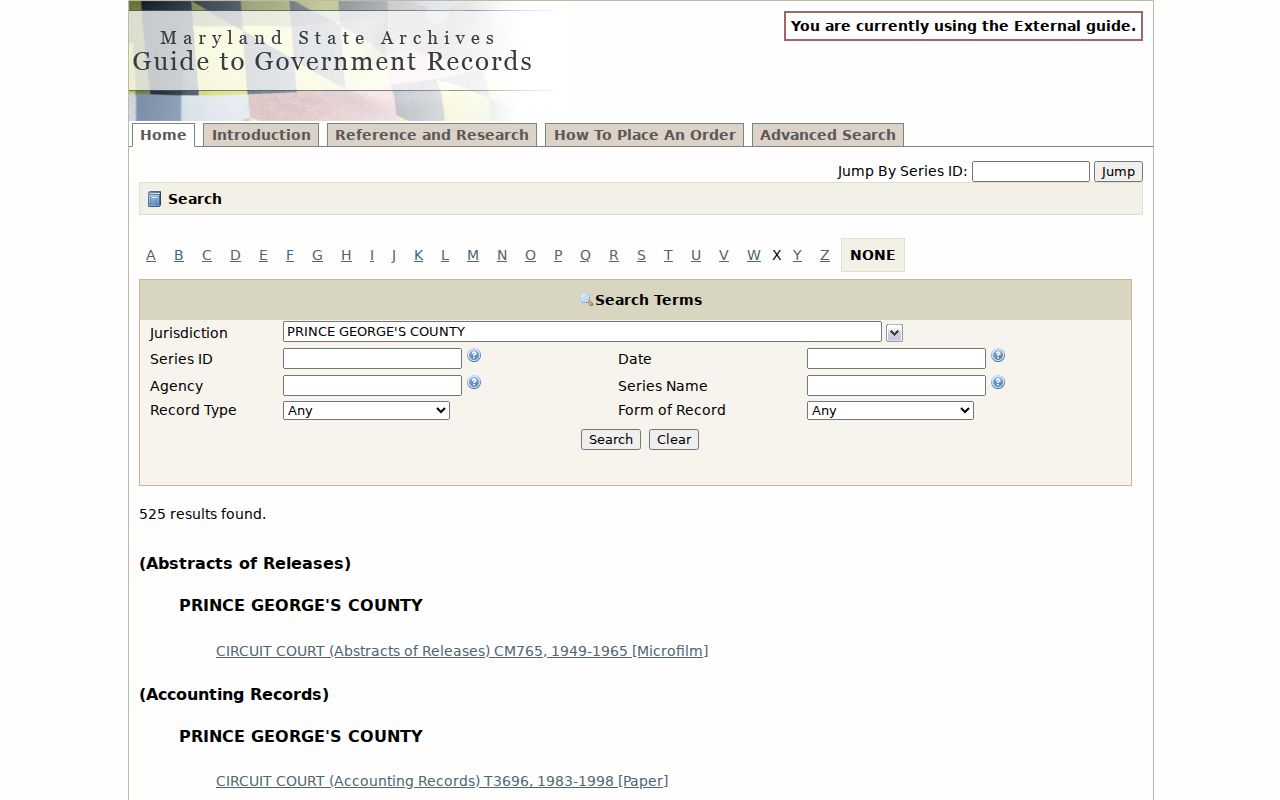
The Archives guide keeps a gap productive. It turns a missing Bowie online item into a focused series, date-range, and transfer question for the right custodian.
The Library of Congress Sanborn search guide documents the search vocabulary, from city and state to sheet. The Bowie edition itself remains a gap.
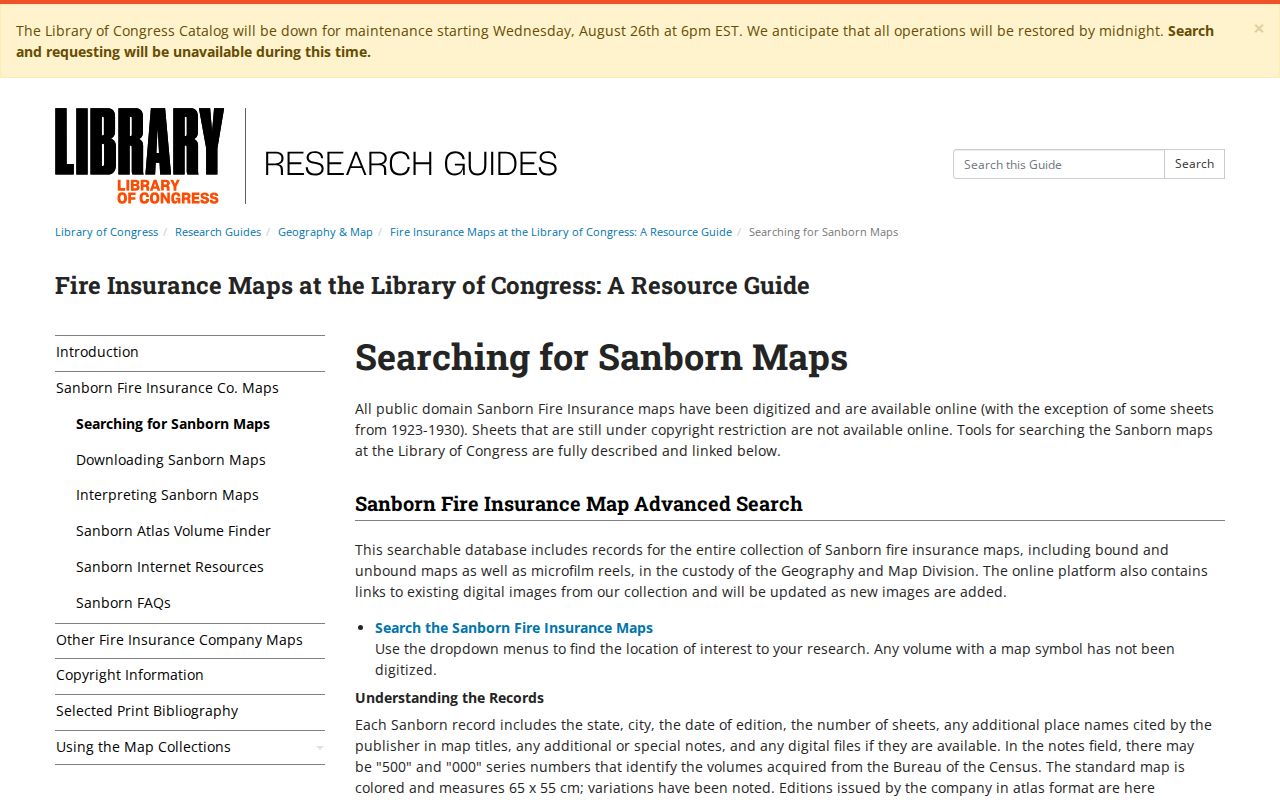
Use that guide to frame the Bowie request to the local archive. Record the alternative map's date, sheet or image, and its relationship to the parcel.
History explains why this fallback chain matters. The Upper Marlboro courthouse fire struck in 2004. River water damaged Circuit Court material again in 2011. Older records had already moved or transferred largely to MSA, damaged material received archival salvage work, and the clerk plus the Archives remain the first stops when a Bowie courthouse-era file is unavailable.